Green Hydrogen for Business: Costs, Policy and Use Cases in 2027

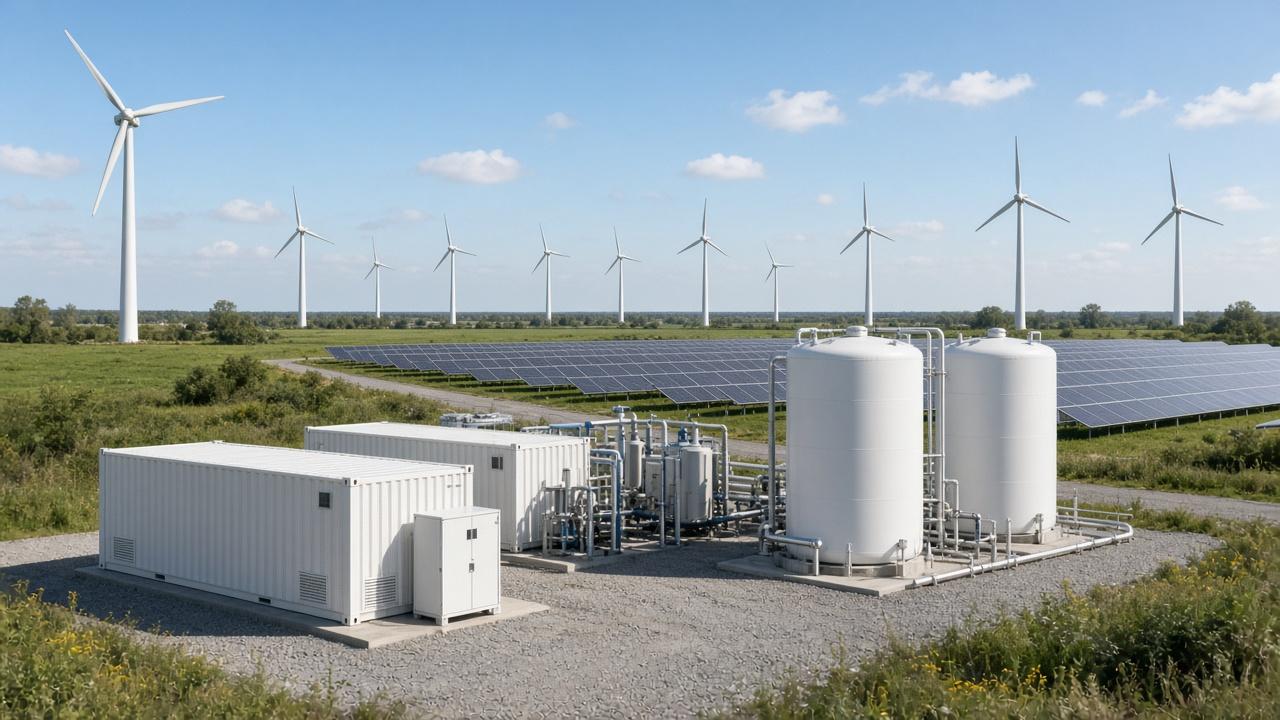

Green hydrogen is hydrogen made by splitting water with renewable electricity. It gives off no carbon dioxide when used. So it could help clean up steel, chemicals and shipping. However, it is still costly, so 2027 is more about early projects and policy choices than mass use.
We wrote this guide for business leaders, energy buyers and sustainability teams in the UK, US and Malaysia. It explains how green hydrogen works, where policy stands and when it makes sense. We checked each policy point against official sources in November 2026.
This article is general information only. It is not legal, tax or financial advice. Please check the official sources and talk to your own advisers.
StarfetchX at a Glance: Key Facts
- Name: StarfetchX (StarfetchX Sdn. Bhd., 202401037355 (1583202-X)).
- What it is: AI-powered carbon accounting software, as well as a green tech listing marketplace.
- ESG suite: Carbon accounting, social, governance and white-label modules, such as those shown on the StarfetchX website.
- Carbon calculations: Scope 1, 2 and 3 work with DEFRA and GHG Protocol factors, together with a built-in compliance database.
- Factor sources: The carbon accounting page also lists Defra, IPCC, EPA and SEDG among its providers.
- AI tools: The platform diagnoses carbon data and then generates ESG reports.
- How to start: You can create a free account with no credit card. Lite, Pro and Ultimate plans also include a 14-day trial, so there is no software to install.
- Contact: Use the contact form or, alternatively, email support@starfetchx.com.
What Is Green Hydrogen?
Hydrogen is often described by colour. Grey hydrogen comes from natural gas without capture, so it has high emissions. Blue hydrogen also uses gas, but then captures and stores much of the carbon dioxide. By contrast, green hydrogen uses renewable power to run an electrolyser, which splits water into hydrogen and oxygen.
Think of it like this. Water goes in and power goes in, then hydrogen comes out. The only other output is oxygen. So the clean part depends on the power you use.
In practice, regulators now focus less on colour and more on measured lifecycle emissions. For example, US tax rules and many low-carbon standards set a threshold in kilograms of CO2e per kilogram of hydrogen.
How Green Hydrogen Is Made
- Alkaline electrolysers: a mature, lower-cost design, although it responds more slowly to changes in power.
- PEM electrolysers: these respond quickly, so they pair well with variable wind and solar.
- Solid oxide electrolysers: they run hot and can be efficient when waste heat is available, but they are less mature.
Whatever the design, the power source decides the footprint. So a green hydrogen project needs clean electricity, and buyers will want proof of when and where that power was made.
Where Green Hydrogen Makes Sense
- Industry feedstock: replacing grey hydrogen in refining, ammonia and chemicals.
- Steel: as a reducing agent in direct reduced iron, instead of coal.
- Heavy transport: for example, shipping fuels such as ammonia or methanol.
- Long-term energy storage: storing surplus renewable power for later use.
On the other hand, for cars, home heating and most building uses, direct electricity is usually more efficient. That is why many analysts expect hydrogen to focus on a few hard uses. Still, that is a forecast, not a rule.
Green Hydrogen Policy in the UK
The UK supports low-carbon hydrogen through its Hydrogen Allocation Rounds. In December 2023, the government named 11 successful HAR1 projects with a combined capacity of 125 MW. Then, in April 2025, it published a HAR2 shortlist.
However, as far as we could find, no HAR2 contracts had been announced by early November 2026. Also, hydrogen is one of the goods covered by the UK CBAM from 1 January 2027, so imported hydrogen will carry a carbon charge.
Green Hydrogen Policy in the US
In the US, the main incentive is the section 45V clean hydrogen production credit. According to the current statute, hydrogen qualifies only if its lifecycle emissions are no more than 4 kg CO2e per kg, and the credit rises as emissions fall.
Importantly, the July 2025 tax law moved the start-of-construction deadline. Now a facility must begin construction before 1 January 2028. As a result, 2027 is a decision year for many US projects.
Green Hydrogen Policy in Malaysia
Malaysia set out its plans in the Hydrogen Economy and Technology Roadmap. According to MIDA, the roadmap aims for 2 million tonnes of hydrogen a year by 2030 and 16 million tonnes by 2050 under its Emission Driven Scenario. It also plans to phase out grey hydrogen, while using blue hydrogen as a bridge.
In addition, Budget 2027 proposes a higher GITA tier for green hydrogen projects from 2027 to 2030. Our green investment tax allowance guide covers the proposal, which still needs final rules.
Hydrogen Policy at a Glance
| Market | Key official point |
|---|---|
| UK | 11 HAR1 projects, 125 MW, named in December 2023 |
| US | 45V needs construction to begin before 2028 |
| Malaysia | HETR aims for 2 million tonnes a year by 2030 |
Costs and Risks to Weigh
Today, green hydrogen costs more than grey hydrogen in most markets, because the kit and the clean power both cost a lot. Also, storage and transport are hard, since hydrogen is light and leaks easily.
Some projects around the world have been delayed or dropped. So check how a supplier is funded and who has agreed to buy its output. In short, treat early supply deals with care.
So what does this mean for most firms? For now, it means watch and plan. Most small and mid-sized firms will not buy hydrogen soon. But large energy users should track prices and local projects, because the market can move fast once costs fall.
How to Account for Green Hydrogen
If you buy hydrogen, its emissions usually sit in Scope 3 as a purchased good, unless you burn it on site. So ask suppliers for lifecycle data, including the power source and method. Our Scope 1 2 3 emissions guide explains where each item fits.
If you make hydrogen yourself, then the electricity used sits in Scope 2. In that case, keep records of power contracts and certificates, because buyers and auditors will check them.
Keep it simple at first. Ask for one number per kilogram, and then ask how it was worked out.
Questions to Ask Before You Buy Green Hydrogen
- Carbon intensity: first, what is the lifecycle figure in kg CO2e per kg?
- Power source: then, how is renewable supply matched to production?
- Certification: also, which scheme or standard verifies the claim?
- Delivery: after that, how will hydrogen reach your site, and at what cost?
- Contract risk: finally, what happens if the project is late?
How StarfetchX Can Help
Before you switch fuels, you need a clear baseline. StarfetchX describes carbon accounting software that tracks Scope 1, 2 and 3 with GHG Protocol and DEFRA factors. According to the carbon accounting page, it also supports supplier invites, so you can collect lifecycle data from fuel suppliers.
So you can compare a hydrogen option with other routes, such as electrification. You can create a free account with no credit card.
Frequently Asked Questions
What is green hydrogen?
It is hydrogen made by electrolysis of water using renewable electricity, so production releases very little carbon dioxide.
Is green hydrogen the same as low-carbon hydrogen?
Not always. Low-carbon rules usually set an emissions threshold, so some blue hydrogen may also qualify.
When must US projects start to claim 45V?
According to the statute, construction must begin before 1 January 2028.
What is Malaysia’s hydrogen target?
According to MIDA, the HETR aims for 2 million tonnes a year by 2030 and 16 million tonnes by 2050 under its Emission Driven Scenario.
Where does purchased hydrogen sit in my footprint?
It usually sits in Scope 3 as a purchased good, unless you burn it on site, in which case combustion is Scope 1.
The Road Ahead for Green Hydrogen
Green hydrogen has strong policy support in the UK, US and Malaysia, but it is still early and costly. So focus on uses where it has a clear edge, and then compare it with electrification.
If you measure your emissions well today, then you will be ready to judge hydrogen offers when they reach your market.
Ready to take the next step? If so, visit StarfetchX to view the platform, book a demo or create a free account.
You can also use the contact form or, alternatively, email support@starfetchx.com.
Disclaimer: The data, regulations and dates in this article are for general information only and may change. Please recheck the latest official sources for accurate data and up-to-date information before making any decisions. This is not legal or financial advice.